
The Changing Face of Employment in India: From Stability to Agility
For decades, employment in India followed a familiar pattern—secure a permanent job, grow within the same organization, and build a long-term career anchored in stability. Permanence was not just an employment model; it was a mindset. It defined success, security, and identity.
But that model is steadily evolving.
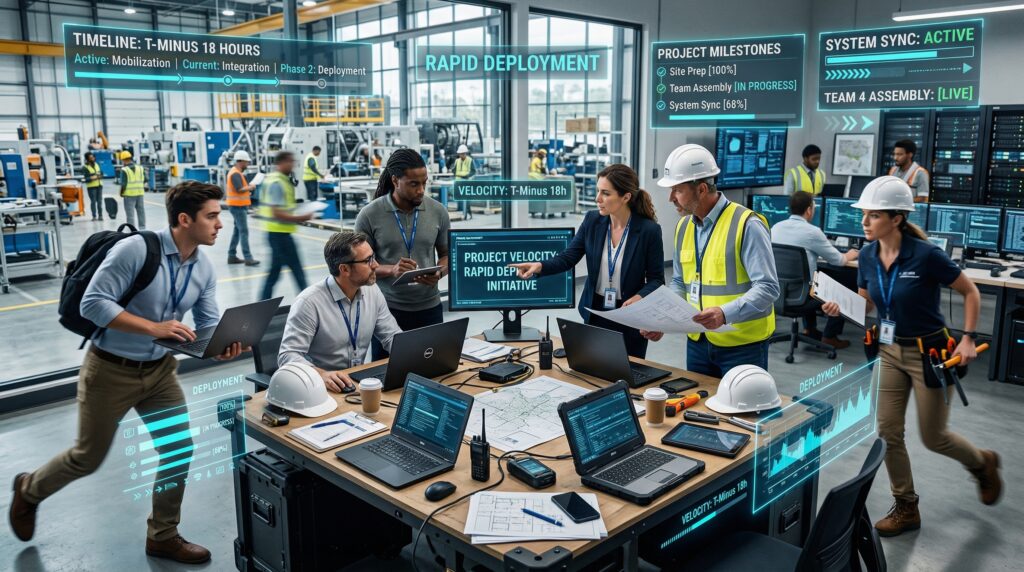
Today, businesses are no longer built on predictability. They are driven by speed, competition, and constantly shifting market demands. Projects begin faster, scale rapidly, and conclude just as quickly. In such an environment, the traditional idea of maintaining large, fixed workforces is being replaced by something far more dynamic—a workforce designed for execution, not just continuity.
Why This Shift Is Happening
The transition from permanent employment to project-based engagement is not accidental. It is a response to deeper structural changes in how businesses operate.
Organizations today face fluctuating workloads rather than steady pipelines. A large infrastructure project, a renewable energy installation, a digital transformation initiative, or a manufacturing expansion—each comes with intense bursts of activity followed by periods of stabilization. Maintaining permanent teams for such cycles creates inefficiencies.
At the same time, skill requirements are becoming highly specialized. Companies no longer just need “employees”; they need specific expertise at specific stages—design, execution, commissioning, optimization. The ability to bring in the right talent at the right time has become more valuable than holding a general pool of resources.
Speed has also become a defining factor. Businesses cannot afford long hiring cycles when project timelines are tight. The expectation today is immediate deployment, immediate contribution, and measurable output.
The Rise of Project-Based Engagement
This is where project-based and flexible employment models are gaining ground.
Instead of asking, “Who should we hire permanently?” organizations are increasingly asking,
“What capability do we need right now, and how quickly can we deploy it?”
This shift has given rise to multiple formats of engagement:
- Project-based hiring for defined timelines
- Contractual and flexi-staffing models
- Specialized consultants and domain experts
- Gig and platform-driven work across skill levels
What is important to note is that this trend is no longer limited to entry-level or transactional roles. It is expanding into core engineering, project management, technical advisory, and even strategic functions.
The workforce is becoming modular—assembled, deployed, and reconfigured based on business needs.
What This Means for Organizations
For companies, this shift brings both opportunity and responsibility.
On one hand, it offers:
- Greater cost efficiency
- Faster project execution
- Access to a wider and more diverse talent pool
- Reduced long-term liability
On the other hand, it demands stronger governance:
- Clear role definitions and deliverables
- Structured onboarding and integration of project resources
- Robust compliance and workforce management systems
- Consistent quality and safety standards across a distributed workforce
Organizations that succeed in this model are not those that simply hire flexibly—but those that manage flexibility with discipline.
What This Means for Professionals
For individuals, the change is even more profound.
The definition of career stability is shifting. It is no longer about staying with one organization for years—it is about staying relevant across opportunities.
The new currency of employability is:
- Adaptability
- Continuous learning
- Multi-domain exposure
- Ability to deliver outcomes quickly
Professionals who can move across projects, industries, and roles—while maintaining consistent performance—will find themselves in a position of strength.
At the same time, this shift brings challenges:
- Income variability
- Lack of traditional job security
- Need for self-driven career planning
The responsibility of growth is gradually moving from organizations to individuals.
The Emerging Balance
It is important to recognize that permanent employment is not disappearing. It is evolving.
Core functions, leadership roles, and long-term strategic capabilities will continue to require stability. However, a significant portion of execution-driven roles will increasingly move toward flexible engagement models.
The future is not about choosing between permanent and project-based employment. It is about integrating both intelligently.
India is not abandoning employment security—it is redefining it.
Stability will no longer come from staying in one role. It will come from staying relevant across many.
Organizations will not measure strength by the size of their workforce, but by the agility of it.
And professionals will not build careers by holding positions—but by delivering impact, again and again, across changing landscapes.